
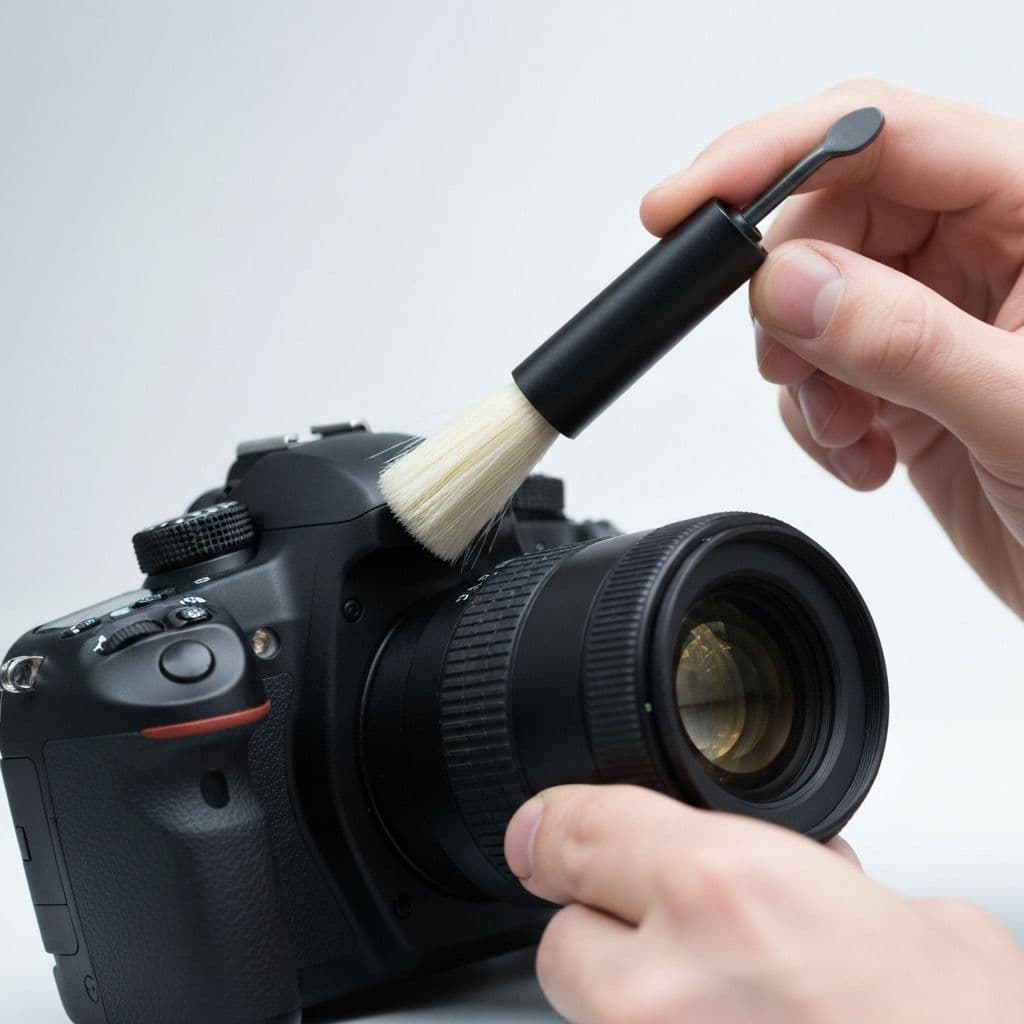
The essentials in one paragraph: take the batteries out when you're not using the camera, keep sand and liquids away from the lens barrel, store it somewhere dry, and clean it with a blower and microfiber cloth — never household glass cleaner. Do those four things and a well-made Y2K digicam will keep shooting for another decade. Here's the why and how behind each one.
Batteries: the number-one killer
More vintage cameras die from battery leakage than from any other cause. If your camera takes AA cells, remove them whenever the camera will sit unused for more than a couple of weeks — alkaline AAs are notorious for leaking corrosive residue that destroys contacts. For regular use, NiMH rechargeables are safer, cheaper over time, and were the recommended choice even when these cameras were new.
Proprietary lithium-ion packs age differently: they lose capacity and can swell. Store them at partial charge rather than full or empty, and if a battery ever looks puffy, stop using it. Every camera we sell ships with a tested battery, but even good cells are consumables — treat a spare as part of the kit.
Protect the lens mechanism
The telescoping lens barrel is the most delicate part of a compact camera. Never force a lens that's stuck, and never put a camera in a sandy bag or pocket — a single grain of sand in the barrel gears is the classic cause of the dreaded 'lens error.' Let the camera fully retract the lens before you stow it, and use a padded case or pouch rather than tossing it loose in a backpack.
Cleaning without damage
For the body, a dry microfiber cloth handles fingerprints and dust. For the lens glass, use a hand blower first to remove grit, then a lens pen or a microfiber cloth with a drop of proper lens-cleaning fluid — never spray anything directly at the camera, and never use paper towels or alcohol wipes on coated glass. For the LCD, microfiber only; a stick-on screen protector is cheap insurance against pocket scratches.
Avoid liquids near seams, buttons, and the card door. These cameras predate weather sealing, and moisture that wicks inside can corrode the flash circuit, which carries a surprising amount of charge.
Storage, cards, and the clock battery
Store your camera somewhere cool and dry — a shelf indoors is fine, a hot car or humid garage is not. A few silica gel packets in your camera drawer help in damp climates. Format memory cards in the camera (not on a computer) to keep the file system happy, and eject cards only when the camera is off.
One quirk of old digicams: many have a small internal cell that keeps the clock alive. If your camera forgets the date every time you change batteries, that cell has faded. It's harmless — your photos just get the wrong timestamp, which, depending on your feelings about the date-stamp aesthetic, may not be a problem at all.
If something does go wrong, don't force it or open the body yourself. Our cameras carry a 90-day warranty, and our repair page covers what we can help with beyond that.
Find your Y2K camera.
Every camera passes our 15-point inspection and ships with a working battery and a 90-day warranty.
Shop tested Y2K cameras