
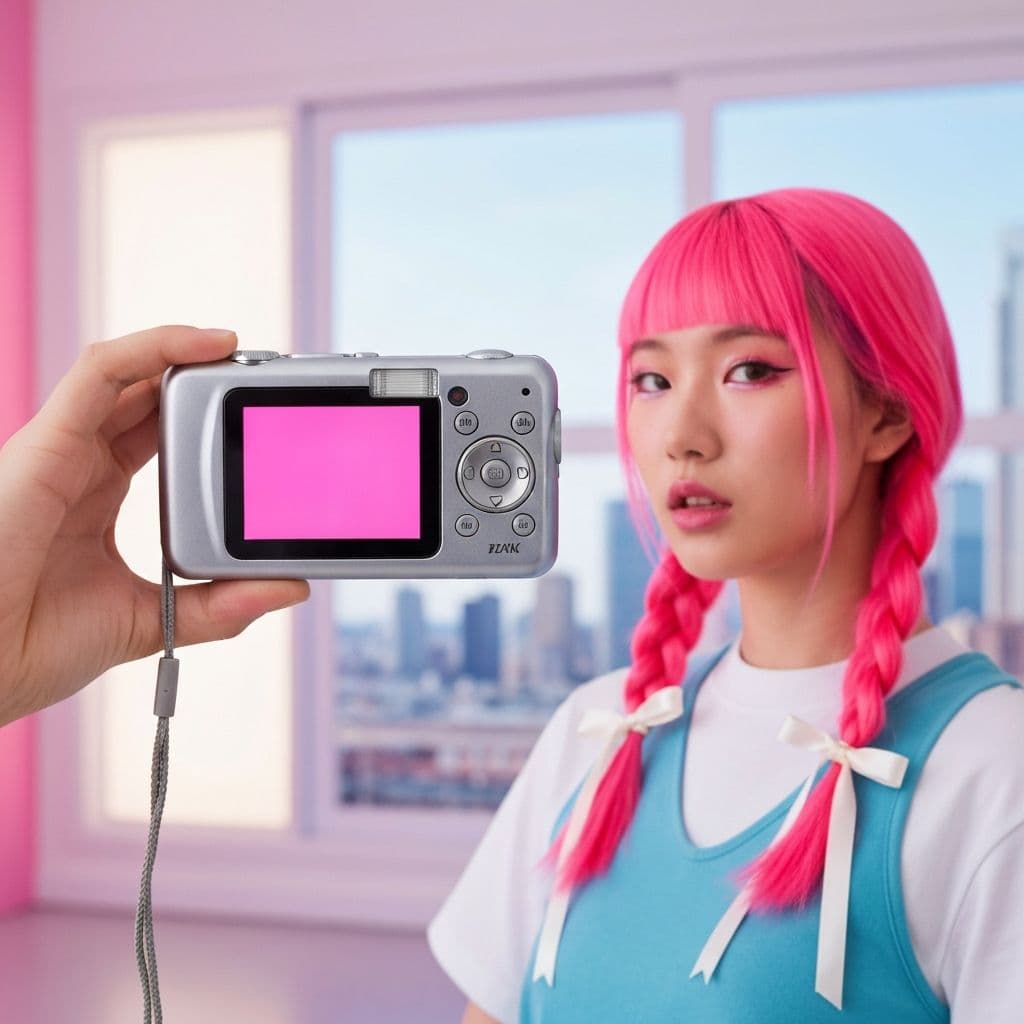
The short answer: Y2K digital cameras are back because they produce a look that modern phones can't — and won't. Early-2000s point-and-shoots used CCD sensors, simple JPEG processing, and hard on-camera flash, which together create saturated colors, soft edges, and a candid, slightly imperfect feel that reads as honest in a feed full of computationally polished images.
If you scrolled through Instagram or TikTok in the last couple of years, you've seen the aesthetic: direct flash, deep blacks, colors that pop a little too much, faces that look like they were photographed at a 2004 house party. That's not a filter. That's what a 5-megapixel Canon PowerShot or Sony Cyber-shot actually does, straight out of the camera.
The CCD look is real, not nostalgia
Almost every compact camera made between roughly 1999 and 2008 used a CCD (charge-coupled device) sensor rather than the CMOS sensors in today's phones and cameras. CCDs of that era tended to render color with a distinctive punch — strong reds and blues, pleasant skin tones under flash — and they handled highlights in a way that gives photos a filmic glow. Combine that with early JPEG engines that applied modest sharpening and no noise-reduction smearing, and you get images with visible grain and texture instead of the plasticky smoothness of computational photography.
Resolution helps the look, too. Most of these cameras shoot 3 to 8 megapixels, which is plenty for social feeds and small prints but low enough that images stay soft and forgiving. Nothing about a Y2K photo screams effort — and that's exactly the appeal.
A camera that is only a camera
There's a second reason the comeback has staying power: these cameras do one thing. No notifications, no editing suggestions, no cloud. You point, you shoot, and you don't see the photos again until you dump the memory card. That little delay — hours or days between shooting and seeing — turns out to be most of what people miss about film, at a fraction of film's cost per frame.
They're also genuinely pocketable. A Canon PowerShot SD-series ELPH or a Sony Cyber-shot T-series is smaller and lighter than any phone, with a real shutter button and, on many models, an optical viewfinder for bright days when the little LCD washes out.
What to know before you buy one
The catch with 20-year-old electronics is that condition varies wildly. Batteries age, lens mechanisms jam, and memory card formats differ by brand — Sony used Memory Stick, Olympus and Fujifilm used xD-Picture Card, while Canon, Nikon, and most others settled on SD. A camera that powers on at a flea market can still have a scratched sensor or a dying LCD.
That's the problem we set out to solve at Measure Joy. Every camera we sell passes a 15-point inspection — lens, sensor, flash, screen, ports, card slot — and ships with a working battery and a 90-day warranty, so your first Y2K camera experience is taking pictures, not troubleshooting.
Whether you buy from us or rescue one from a relative's junk drawer, the comeback is worth joining. These little cameras capture something modern gear has optimized away: photos that look like memories instead of products. Browse our tested cameras if you want to start shooting this week.
Find your Y2K camera.
Every camera passes our 15-point inspection and ships with a working battery and a 90-day warranty.
Shop tested Y2K cameras